
Certified Winter Canola Program
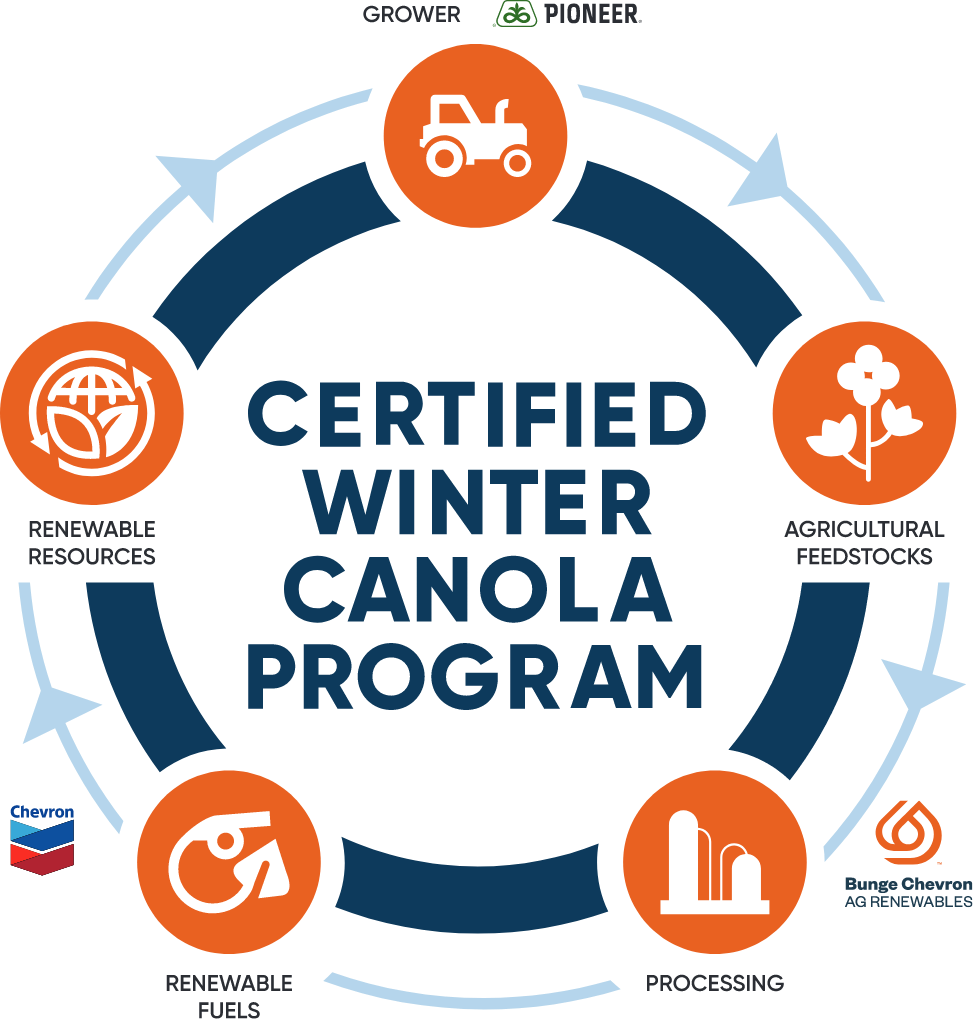
Winter canola is uniquely positioned to function as an intermediate crop within existing cropping systems, improving farm income potential while creating an opportunity to diversify rotations and grow additional agricultural feedstocks for lower-carbon biofuels.
What’s in it for Growers?
4 key potential advantages for growers
participating in the program:
- Increased total farm profitability
- Participate in growing renewables feedstock market and diversify your operation
- Improve soil health through plant diversity and water filtration
- Maximize field productivity through multi-year crop rotation
Winter Canola Regions & Pricing
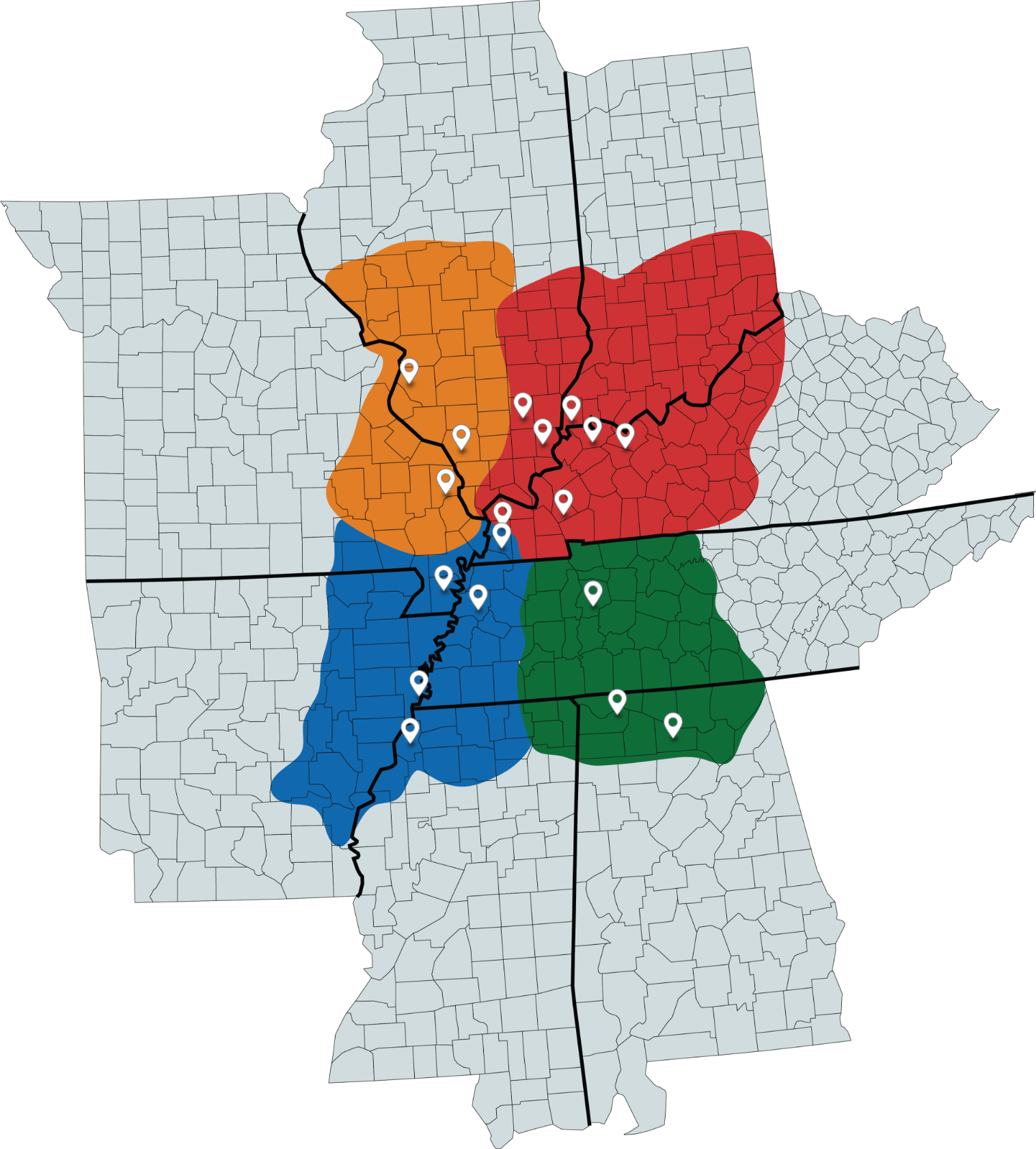
 Denotes delivery site
Cash Bids Subject to Change
A convenient delivery site is available in your region. Please reach out to your local Winter Canola Merchandiser for a specific location.
Winter Canola Yield Data
Yield results from the Certified Winter Canola Program show that this is an opportunity you can’t afford to miss.

*Pioneer® brand winter canola weighted average of 50 Bu/A from on-farm acres in the US Mid-South harvested 2024-2026; with data submitted by growers via scale tickets.
How to Join the Program
1
Reach out to your local Pioneer or Bunge Chevron Ag Renewables representative to sign up for a specific number of acres.
2
Contract acres of production according to winter canola cash bids available for your region.
3
Deliver all grain to your local predetermined facility and get paid by Bunge Chevron Ag Renewables.*
*Grain delivered subject to quality grading standards
Contact Us For More Information About The 2027 Program.
Take the necessary steps to bring even more innovation to your farm operation.
Benefiting Agriculture, Energy and the Environment
Certified Winter Canola is uniquely positioned to be included in current cropping systems, with the goal to improve farm income potential while providing an opportunity to work towards increased U.S.-grown renewable energy alternatives.
Diversify Your Operation.
Review Your Profit Potential.
The Bunge Winter Canola Profitability Calculator is designed to help you evaluate the financial opportunity of adding Certified Winter Canola to your crop rotation. Whether you’re currently using cover crops or looking to diversify your system, this tool offers a simple way to model profitability under different market scenarios and crop plans.
Ready to see how Certified Winter Canola could fit into your farm’s future?
Use the calculator and start planning for a more resilient, profitable rotation.
Why A Certified Winter Canola Program?
A Growing Opportunity.

Supporting a Lower-Carbon Energy Future
As the world prioritizes reducing carbon emissions and transitions to lower-carbon energy sources, the demand for renewable biofuels derived from agricultural crops is steadily increasing. Bunge, Chevron and Vylor are joining forces to unlock innovation across the value chain by introducing proprietary winter canola and building the infrastructure to open the possibility of a new revenue opportunity for growers with a rotational cash crop.

Certified Winter Canola – A
Growing Opportunity
There are a number of benefits that make growing winter canola hybrids a wise choice, from its potential for high yield and enhanced reliability across farming environments to its ability to better manage financial risks. It can be used as a feedstock to produce renewable diesel, biodiesel, sustainable aviation fuel and replacements for petroleum-based chemicals. Because of unique genetics and recommended agronomic practices, this crop has the potential to achieve lower-carbon intensity levels while accessing opportunities to adopt sustainable practices.

Certified Sustainable Grain
Certifying grain under Bunge with their globally recognized program ensures the sustainability of bio-based feedstocks for the production of renewable fuel. Certification provides verification of sustainable agricultural practices, traceability throughout the supply chain and compliance with environmental and social standards. This certification is key to accessing global markets for renewable fuels and other bio-based products, adding further value to this sustainable crop. Choosing a certified intermediate crop contributes to a lower-carbon footprint and supports responsible land use and biodiversity protection. It assures buyers and consumers that the grain is produced according to high sustainability criteria, bolstering confidence in its environmental credentials.
Winter Canola Frequently Asked Questions
Certified Winter Canola is planted in the fall and overwinters to be harvested in the early summer. By comparison, Spring Canola is planted in early spring and harvested in the fall. The plants are similar in terms of their biological makeup, although Certified Winter Canola has better tolerance to cold and freezing. Due to its longer growing season, Certified Winter Canola yields are about 20% to 30% higher than those of Spring Canola. Certified Winter Canola can be used in your current double-cropping system (as a rotational crop following corn or soybean) or on acres that are fallow in winter.
Certified Winter Canola is planted in mid- to late September following the summer corn or soybean crop. Certified Winter Canola will sprout in about 5 to 7 days under the right conditions and requires around 600 GDUs to reach between 5 and 8 leaves with a stem diameter of 1/4 to 1/2 inch. This supports the best situation for winter hardiness before becoming dormant (overwintering) during the coldest part of the winter. In early spring, the Certified Winter Canola restarts growth and is typically harvested in late May or early June, making it a great companion for double-crop soybeans.
No. Certified Winter Canola can be used in rotation with Winter Wheat since it needs 2 to 3 years before planting in the same field for disease prevention.
No, you will not need new or different equipment to plant and harvest Certified Winter Canola. You can use traditional wheat, corn and soybean planting and harvest equipment with minimal retrofits. Incorporating Certified Winter Canola into a rotation is easy because it fits right into current cropping systems. It follows traditional timing and equipment used for Winter Wheat crop rotations.
Based on university trials in the Mid-South, we anticipate yields of 45 to 55 bu/acre, with potential to be higher based on individual operations.
Pioneer is building on a century of breeding and agronomic expertise to deliver a Certified Winter Canola hybrid that’s uniquely suited to the Mid-South, increasing your chances of a successful harvest. Plus, the partnership with Bunge and Chevron Ag Renewables can help to provide market stability and contract assurances that all production from enrolled canola acres will be purchased. Simply put: Competitor programs don’t have access to Pioneer technology and agronomic support and they don’t have the downstream market that’s been established through this partnership with Bunge and Chevron Ag Renewables.
No. Demand for corn and soybeans is forecasted to continue to be strong and Certified Winter Canola isn’t a replacement for those crops.
BCAR manages sustainability certification for the program, which gives you the opportunity to sell Certified Winter Canola under that certification. Everything is handled through Gradable, our secure certification platform, and you’re never on your own. BCAR and your Gradable contact are both there to support you along the way.
To enroll, growers provide full farm field boundaries, a signed self-declaration and details on the crop-specific inputs used in production. You’ll also agree to be visited for a farm review at some point during your enrollment.
Each year, a small group of certified growers is selected for a farm review. It’s genuinely informal, usually under an hour, at a location you choose. During a review, you may be asked for documentation like spray diaries, soil tests, field history, chemical management records or supporting invoices and receipts. Bunge is with you every step of the way.
Use our Winter Canola Profitability Calculator and start planning for a more resilient, profitable rotation.
We appreciate your support and partnership in developing this long-term program focused on more sustainable solutions for consumers around the world and for helping drive change at scale.




This material is for information purposes. It does not constitute an offer and does not create any obligation until definitive agreements are executed. Nothing herein should be construed as constituting a representation or warranty, either expressed or implied, of accuracy, completeness or fitness for purpose. Bunge disclaims any liability, direct or indirect, for losses or damages relating to the use of this document. Other Program eligibility requirements and conditions to apply. Copyright 2026 BUNGE. All rights reserved.